

Paul Lauzon’s music is rooted in a simple idea: songs matter most when they say something real. His approach to roots rock brings together storytelling, melody, life experience, and recurring themes of love, hope, family, resilience, gratitude, and the passage of time.
Rather than treating those ideas as separate topics, Paul’s songs often connect them. Family can become a source of strength. Memory can turn into gratitude. A difficult season can lead to hope. A quiet place can become a reminder of what matters most. That emotional connection is part of what gives roots-oriented music its lasting appeal.
Roots Rock as a Storytelling Tradition
Roots rock draws from folk, country, blues, rock and traditional songwriting. At its best, the genre leaves room for a clear voice, memorable melodies and stories that feel lived-in rather than manufactured.
For Paul, that storytelling tradition creates space for songs about relationships, family, reflection, aging, resilience and the moments that shape a life. The music does not need to be complicated to carry weight. Often, a straightforward arrangement and an honest lyric can communicate more than a heavily layered production.
If you are new to the genre, read What Is Roots Rock? Origins, Sound and Influences for a broader introduction to the style and its musical roots.
Love as More Than a Romantic Theme
Love in songwriting is often reduced to romance, but it can reach much further. It can describe commitment, friendship, family bonds, forgiveness, memory, gratitude and the quiet acts that hold relationships together over time.
Those broader forms of love are especially well suited to roots music because the genre tends to value plainspoken storytelling. A lyric does not have to make a grand declaration to be meaningful. Sometimes the strongest line is the one that recognizes a familiar moment: a long drive, a conversation at the kitchen table, a shared memory, or the comfort of being with people who know us well.
Family as an Anchor
Family is another recurring theme in Paul’s work and in the wider songwriting tradition that influences him. Family stories can carry humour, conflict, gratitude, responsibility, history and a sense of belonging all at once.
That makes family especially rich territory for songwriting. A song can look backward at the people who shaped us, reflect on the life we are building now, or consider what we hope to leave behind.
Paul’s music often approaches family as an anchor rather than an abstract ideal: something connected to real people, places, memories and choices. That grounded perspective helps the songs remain personal while still giving listeners room to connect their own experiences.
Hope Without Pretending Life Is Easy
Hope is most believable in music when it does not ignore difficulty. Songs about resilience work because they acknowledge uncertainty, disappointment, change and loss while still leaving open the possibility of movement, gratitude or renewal.
That balance is important. A meaningful song does not have to provide an answer to every problem. Sometimes it simply needs to recognize that people keep moving forward, even when the path is unclear.
That kind of perspective also appears in Paul’s conversations outside his songs. In his heCast podcast interview, he discusses creativity, legacy, gratitude, forgiveness, personal growth and the decision to keep pursuing meaningful work later in life.
Life Experience as Creative Material
Songwriters often become more interesting as they accumulate experience. Time changes the questions we ask, the memories we return to and the way we understand relationships, work, ambition and success.
Paul’s music draws from that perspective. Instead of writing only about the urgency of the present moment, his songs often look at life across a wider span: where we came from, what we value now and what we hope to carry forward.
That perspective is central to It’s About Life, Paul’s 12-song album. The record brings together stories and reflections about life, relationships, memory, place and the journey through different seasons.
Why Simple Arrangements Can Make the Message Stronger
Meaningful lyrics need space. In roots rock, a simple arrangement can give the vocal and story room to lead while guitars, rhythm and other instruments support the emotional direction of the song.
That does not mean the music has to be sparse. It means each part should have a purpose. When the arrangement is clear, listeners can focus on the lyric, the melody and the emotional movement of the song.
For more on that approach, see Why Simple Arrangements Can Make a Song Hit Harder.
Place, Memory and the Meaning of Home
Some songs become powerful because they connect an emotion to a place. A cabin, a road, a town, a room or a landscape can hold memories that are difficult to express directly.
Paul’s “Cabin Song” is a clear example. The song uses the feeling of time away, family gatherings and a quieter setting to explore reflection and connection. The setting matters because it gives the emotion somewhere to live.
This is one reason music and memory are so closely linked. A place can become attached to a song, and a song can bring a place back instantly.
Music as a Way to Connect Across Cultures
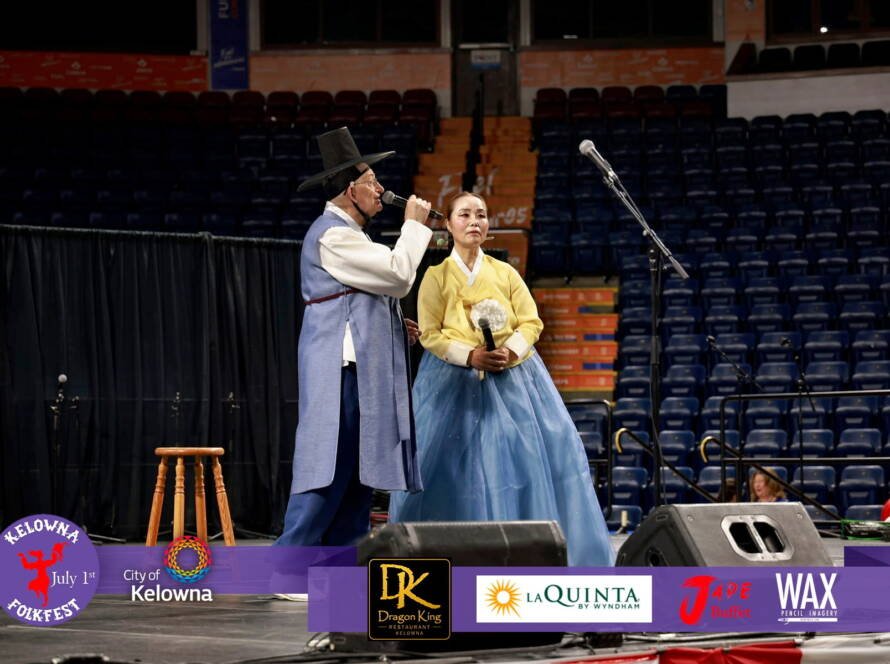
Roots-oriented music can also create meaningful connections between different traditions. At Kelowna’s 51st Folkfest on Canada Day 2026, Paul and his wife performed an unreleased duet influenced by traditional Korean music.
The performance showed how personal songwriting can meet a different musical heritage without losing its emotional core. You can read more in A Canada Day to Remember: Paul Lauzon Performs at Kelowna’s 51st Folkfest and explore the background in Korean Music Traditions: Pansori, Minyo, Trot and More.
Music, Poetry and the Same Core Ideas
Paul’s creative work is not limited to songs. His poetry explores many of the same kinds of questions: memory, human connection, observation, change and the way ordinary experiences can carry deeper meaning.
Songwriting and poetry use different structures, but both depend on choosing the right words, images and rhythms. That overlap is part of Paul’s broader creative identity and gives visitors another way to experience his work.
What Paul Lauzon’s Music Is Trying to Do
The goal is not to present a perfect life or to reduce complicated experiences to slogans. It is to make music that recognizes what people actually carry with them: love for family, gratitude for meaningful relationships, memories of places and people, the need for hope, and the desire to keep moving forward.
That is where roots rock is especially effective. It can be direct without being shallow, reflective without becoming distant, and personal while still speaking to a wider audience.
For listeners who want music built around story, melody and lived experience, Paul’s work offers a growing collection of songs, videos and poetry shaped by those values.